Determining a position of a tool in a work area of a bond tester
WO2024058654
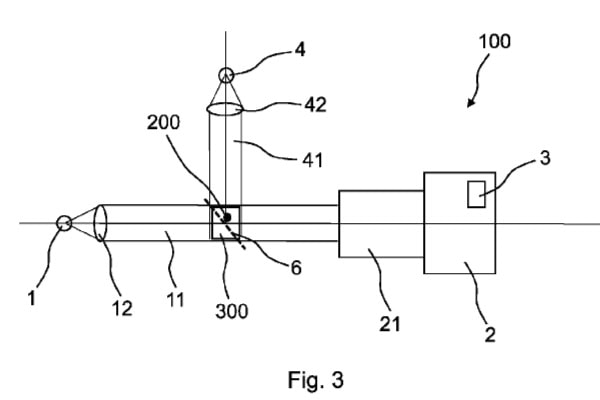
A system for determininga the distance from tool to camera inaworkareaofa bond tester, comprising: – a light source positioned sidewards of the workarea, configured to emit a light beam for illuminating the tool from the side; – a camera, positioned sidewards of the workarea across of the light source, arranged to capture images of the light source and the tool; – a processor, communicatively coupled with the camera and configured for processing images received from the camera, wherein in use the tool is positioned within the light beam that is emitted from the light source to the camera, and wherein the processor is configured to determinepositioning data of the tool by evaluating local differences in light intensity on the images captured by the camera while viewing the light source and the tool.
Bond tester and method for operation a bond tester
WO2024091115
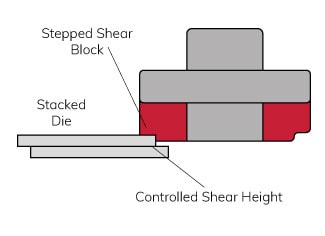
The Nano Control Shear Sensor complements the Sigma Nano HA’s precise tool positioning with active control of the shear height. An internal drive with closed-loop control positions the tool at the programmed height with a precision of 200 nm and maintains that height throughout the test. Fast movement to the programmed shear height reduces the time between tests and supports higher throughput. Together, the Nano HA and the Nano Control Shear Sensor combine accurate alignment, stable test conditions, and efficient wafer-level shear testing.
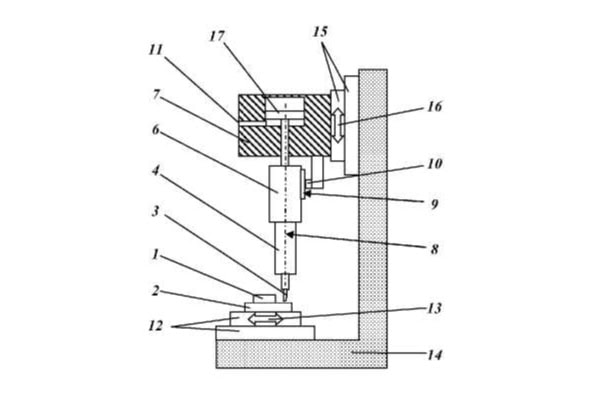
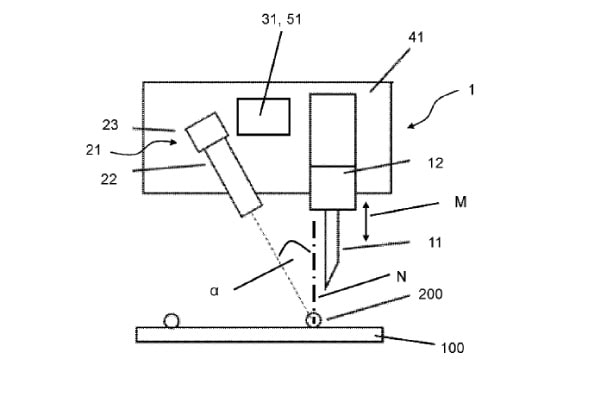
A bond tester, for testing a characteristic of a bond between a substrate and an element bonded to said substrate, the bond tester comprising: – a tool configured to be in contact with the element during a test cycle, the tool moveable towards and away from the element to be tested; – a positioning camera, for viewing the substrate through a lens thereof, and – a processor, arranged in communication with the positioning camera for receiving images taken by said camera, the processor configured for determining a position of the tool relative to the element based on said images, wherein the camera effectively views the substrate at an angle compared to a direction normal to the substrate, allowing the camera to view both the element to be tested and the tool when the tool is in a position near or in contact with the element.